
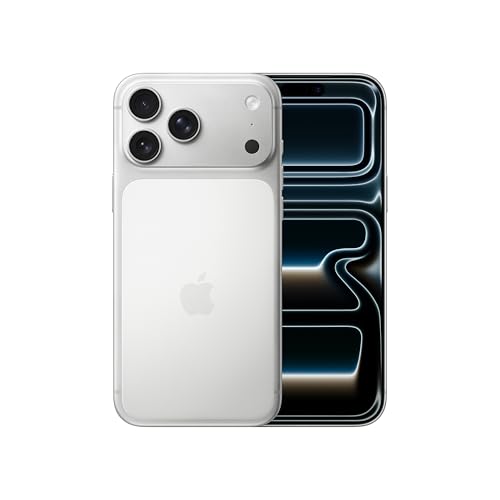
The iPhone 17 Pro Max presents a broad, deliberately high-end specification rather than a phone built around one isolated headline feature. Its central proposition is a combination of A19 Pro silicon, a 120Hz OLED display, three 48MP rear cameras and a substantial set of hardware protections. That makes it a natural fit for buyers who want Apple’s current flagship formula expressed through display, imaging and processing hardware.
Flagship foundations
The 6.3-inch OLED panel has a 2622-by-1206 resolution, a 120Hz refresh rate and a stated peak brightness of 3,000 nits. Those figures give the screen strong technical foundations for detailed presentation, fluid motion and substantial brightness headroom on paper. The 18MP front camera adds a higher-resolution option for front-facing photography and video capture, while the rear arrangement is more ambitious: 48MP main, ultrawide and telephoto cameras provide three distinct perspectives without reducing the system to a single focal length.
Optical image stabilisation is also confirmed for the camera system, giving the main imaging hardware a defined stabilisation provision. The important point is versatility: this is a specification designed to cover standard, wide-angle and telephoto compositions, rather than treating the rear camera as one general-purpose sensor.
Power and endurance
Apple’s A19 Pro chipset is supported by a six-core CPU and a six-core GPU with Neural Accelerators. That architecture positions the handset for demanding flagship-class tasks, although the supplied specifications establish the components rather than independent performance results. The phone runs iOS 26 and includes 5G connectivity, giving the platform a current operating-system base and access to the stated mobile-network standard.
Battery figures are unusually specific: Apple rates the device for up to 37 hours of video playback and up to 33 hours of streamed video playback. A stated 50-per-cent fast-charge time of 20 minutes adds a clear replenishment target, while wireless charging is supported. These are manufacturer figures, so they should be read as declared capabilities rather than a guarantee of a particular usage pattern.
Physical compromises
The aluminium unibody, Ceramic Shield 2 front and Ceramic Shield back create a clearly defined construction recipe. IP68 water resistance adds another confirmed protection measure. However, the 8.75mm thickness makes the handset physically substantial, and the 6.3-inch screen establishes a format that will not suit buyers seeking a compact device. Storage begins at 256GB, which is a useful fixed capacity but also sets a ceiling for locally held applications, photos and video within this configuration.