
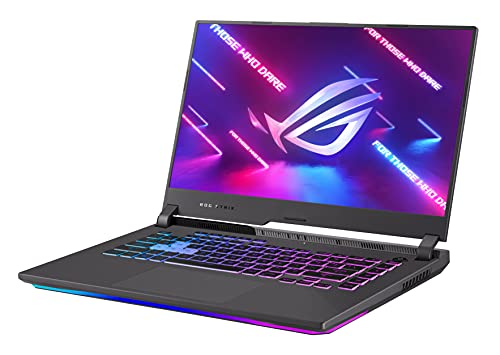
The ASUS G15 presents a recognisable gaming-laptop proposition: a 15.6-inch display with a 144Hz refresh rate, dedicated NVIDIA graphics and a four-core Intel Core i5 processor. That combination gives the machine a clear hardware identity, even before considering its connectivity and storage. It is designed for buyers seeking a Windows laptop with gaming-oriented components rather than a lightweight general-purpose notebook.
Display and graphics
The 15.6-inch IPS-level panel uses a 1920 x 1080 resolution and a 144Hz refresh rate. The resolution is a sensible match for the screen size, while the high refresh rate provides the technical foundation for fluid motion. The GTX 1650 Ti carries 4GB of GDDR6 graphics memory, establishing a dedicated graphics platform rather than relying on integrated processor graphics. Those specifications define the G15’s intended position, although they do not by themselves establish a particular frame rate or visual result in any individual game.
The Intel Core i5-10300H supplies the main processor platform. Its H-series designation identifies a laptop chip intended for higher-power computing designs, while Windows 10 Home provides the operating-system foundation. The specification is straightforward: dedicated graphics, a mobile performance processor and a high-refresh display are the central priorities.
Storage and connections
A 512GB PCIe 3.0 NVMe M.2 SSD gives the system solid-state storage using a PCIe interface. That is a more substantial starting point than a very small system drive, though the capacity remains a finite resource for a laptop intended to hold applications and games.
Connectivity is one of the G15’s more useful strengths. It includes three USB 3.2 Gen 1 Type-A ports, a USB 3.2 Gen 2 Type-C port with DisplayPort and G-SYNC, HDMI 2.0b, a combined 3.5mm audio jack, Wi-Fi 6 and Bluetooth 5.1. This gives the machine several physical connection options, while the wireless specification supports dual-band 2x2 Wi-Fi 6 connectivity on paper. The USB-C display capability and HDMI output also make external-screen connections part of the laptop’s defined feature set.
The compromises
The clearest weakness is the 4GB memory allocation. That is a tight starting point for a Windows laptop and places an important constraint on the overall specification.
At 2.30kg, the G15 is substantial for a portable computer. Buyers who expect to carry it frequently should treat that weight as part of the ownership equation. The FHD resolution also means the panel offers less pixel count than higher-resolution displays, although it aligns with the machine’s 144Hz focus.