
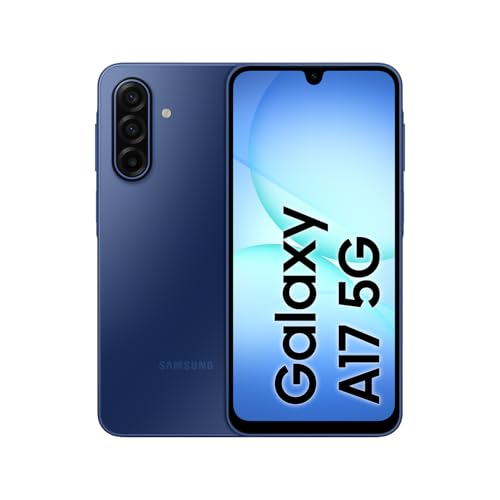
The Samsung Galaxy A17 4G is built around a straightforward proposition: a large, high-resolution AMOLED display, a useful-looking camera arrangement and a substantial battery in a 4G smartphone. Its specification is strongest where visual presentation and photographic flexibility meet, although the 4GB RAM allocation and lack of 5G make its positioning clear.
A display-led design
The 6.7-inch Super AMOLED screen has a 1080 x 2340 FHD+ resolution, giving it a technically detailed foundation for a spacious viewing area. A 90Hz refresh rate adds support for more fluid motion than a conventional 60Hz panel, at least on paper. This combination should suit buyers who prioritise screen size and display technology for general phone use, without requiring a smaller handset.
The physical figures reinforce that large-screen identity. At 190g and 7.5mm thick, the phone is substantial rather than compact. That is a clear trade-off: the sizeable display provides room for content, while the weight and dimensions will appeal less to buyers specifically seeking the lightest or smallest device.
Cameras with defined roles
The rear camera system offers a 50MP main camera with optical image stabilisation, alongside a 5MP ultrawide camera. Those confirmed roles provide a broader photographic toolkit than a single fixed perspective, while optical stabilisation gives the main camera a hardware feature designed to help maintain steadier capture. The aperture figures are listed as F1.8, F2.2 and F2.4, though the supplied specification does not assign each value to a particular rear camera.
A 13MP front camera completes the imaging hardware. The numbers establish a clear hierarchy, with the main rear sensor carrying the highest stated resolution and the ultrawide camera providing a separate viewpoint.
Practical hardware balance
The 5,000mAh battery is a substantial capacity figure and should give the phone a solid hardware basis for everyday use, though capacity alone cannot establish endurance. Storage is 128GB, giving the specification a useful amount of built-in space for apps and personal content. The octa-core chipset is listed with a maximum frequency of 2.2GHz, but no performance outcome should be attached to that figure alone.
The main compromise is connectivity. This is explicitly a 4G device, with no 5G support, so buyers wanting the newer mobile-network capability should look elsewhere within Samsung’s range. The 4GB RAM allocation is another modest point in the specification and limits the memory headroom indicated by the hardware.